Custom Gang Drill for Lock and Dam Construction
Project Profile: Custom Seven-Drill System for Concrete Lock Construction
A heavy construction contractor had a narrow window to complete work inside a lock structure.


The Finished Product
Custom Gang Drill for Lock and Dam Construction
Project Profile: Custom Seven-Drill System for Concrete Lock Construction
A heavy construction contractor had a narrow window to complete work inside a lock structure.
HOW WE MADE IT HAPPEN
In the fast-paced world of new product development, resources and time are often limited. To overcome these challenges, companies can turn to APE for expert assistance to accelerate their development processes. This case study highlights how APE supported a military vehicle manufacturer in meeting critical delivery deadlines by developing an efficient weld fixturing system and manufacturing process.

As the military vehicle manufacturer approached the final stages of designing their latest vehicle, they faced a significant hurdle. They lacked both the in-house expertise and the bandwidth to develop the necessary fixturing system and manufacturing process to meet their delivery requirements. Recognizing the urgency, they reached out to APE for a solution.
APE’s expertise in developing advanced weld fixtures exemplifies how strategic partnerships can enhance a company’s capabilities and accelerate product development. This collaboration underscores APE’s commitment to providing solutions that meet the most demanding industry standards and delivery requirements.
Contact us today to learn how APE can help accelerate your product development process.
The Finished Product
Custom Gang Drill for Lock and Dam Construction
Project Profile: Custom Seven-Drill System for Concrete Lock Construction
A heavy construction contractor had a narrow window to complete work inside a lock structure.

The Finished Product
HOW WE MADE
IT HAPPEN
The client was replacing a gate in a lock and dam system. The work required cutting a new channel into the side of the existing concrete structure, installing new mechanical equipment, and recasting the area with new concrete. The work area was normally underwater, so the contractor first had to build a cofferdam to temporarily hold the water back and create access to the structure.
That gave the crew a limited window to complete the work before the rest of the project could move forward. Part of that work involved drilling a large number of holes into the existing concrete wall, with seven holes in each row.
With a conventional rock drill, an operator would have to drill those holes individually— one drill, one hole at a time. On a normal jobsite, that might simply be slow. Inside a tightly scheduled cofferdam project, it could become a serious constraint.
The contractor came to APE with a straightforward question: could they build something that would drill two holes at once? Or four?
APE set out to do all seven.
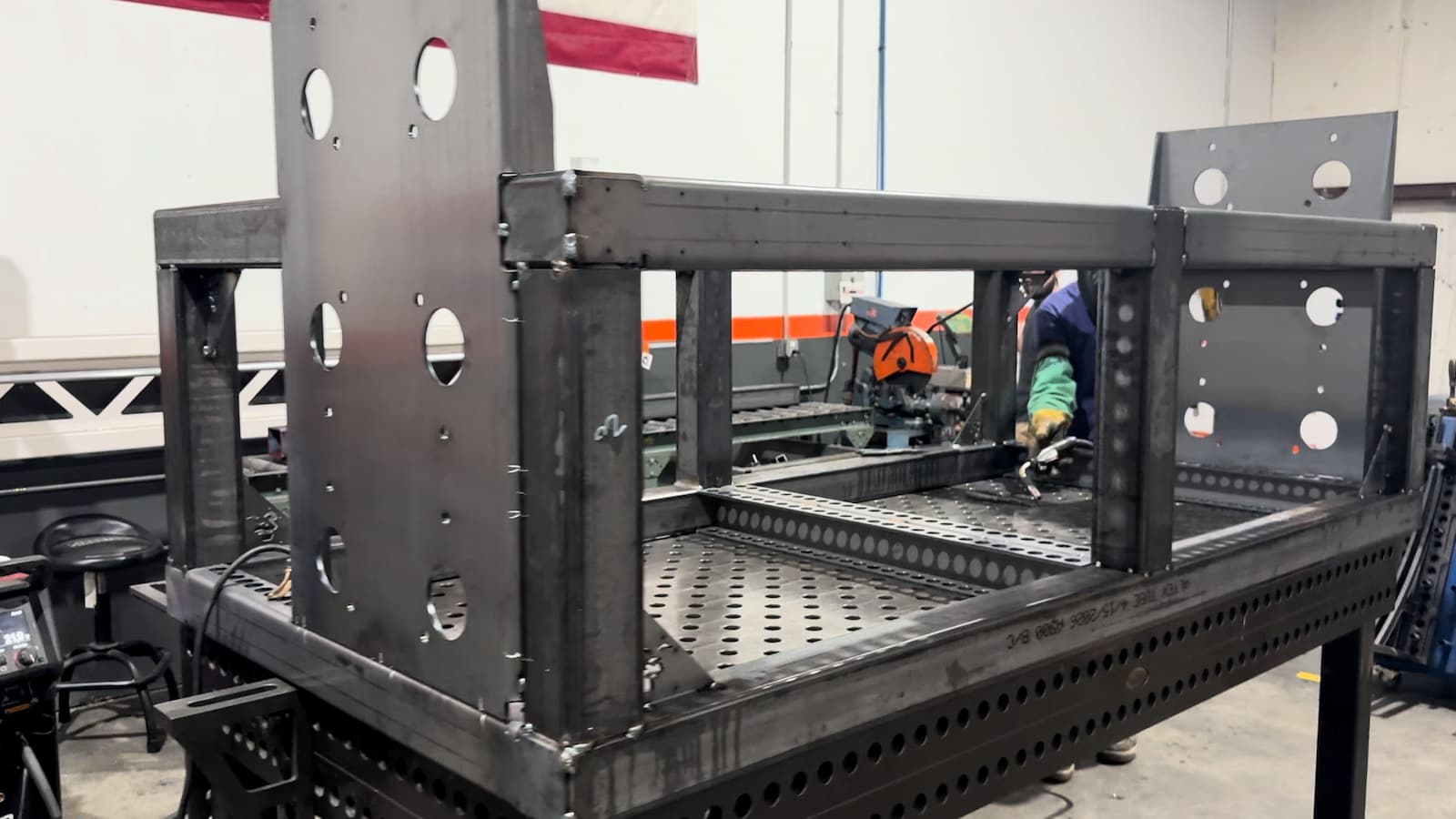
Multiplying the number of drills was only useful if the resulting machine could survive where it was going. Heavy construction is hard on equipment, and this machine would operate around concrete dust, debris, water, hoses, heavy machinery, and crews working against a deadline.
Components would wear, hoses could get damaged, and eventually something would get hit, bent, or broken. So the goal wasn't simply to build a machine that worked. It had to keep working, and when something inevitably needed attention, the contractor needed to be able to get it running again quickly.
That shaped the design around a few practical requirements:
- There was also a basic engineering tradeoff to solve. The drills had to move forward into the
- concrete, but every moving part introduced another potential failure point. Bearings,
- One operator needed to be able to run the system safely.
- The machine had to withstand the abuse of a heavy-construction environment.
- Common wear and damage items needed to be easy to replace.
- Wherever possible, replacement parts needed to be readily available rather than proprietary or difficult to source.
- Individual components and subassemblies needed to be replaceable without rebuilding the entire machine.
- The productivity gain had to justify putting a purpose-built machine on the job.
There was also a basic engineering tradeoff to solve. The drills had to move forward into the concrete, but every moving part introduced another potential failure point. Bearings,bushings, cylinders, hoses, and guide mechanisms all had to operate while exposed to the dust and debris created by drilling concrete. We needed to make the machine move without making it delicate.
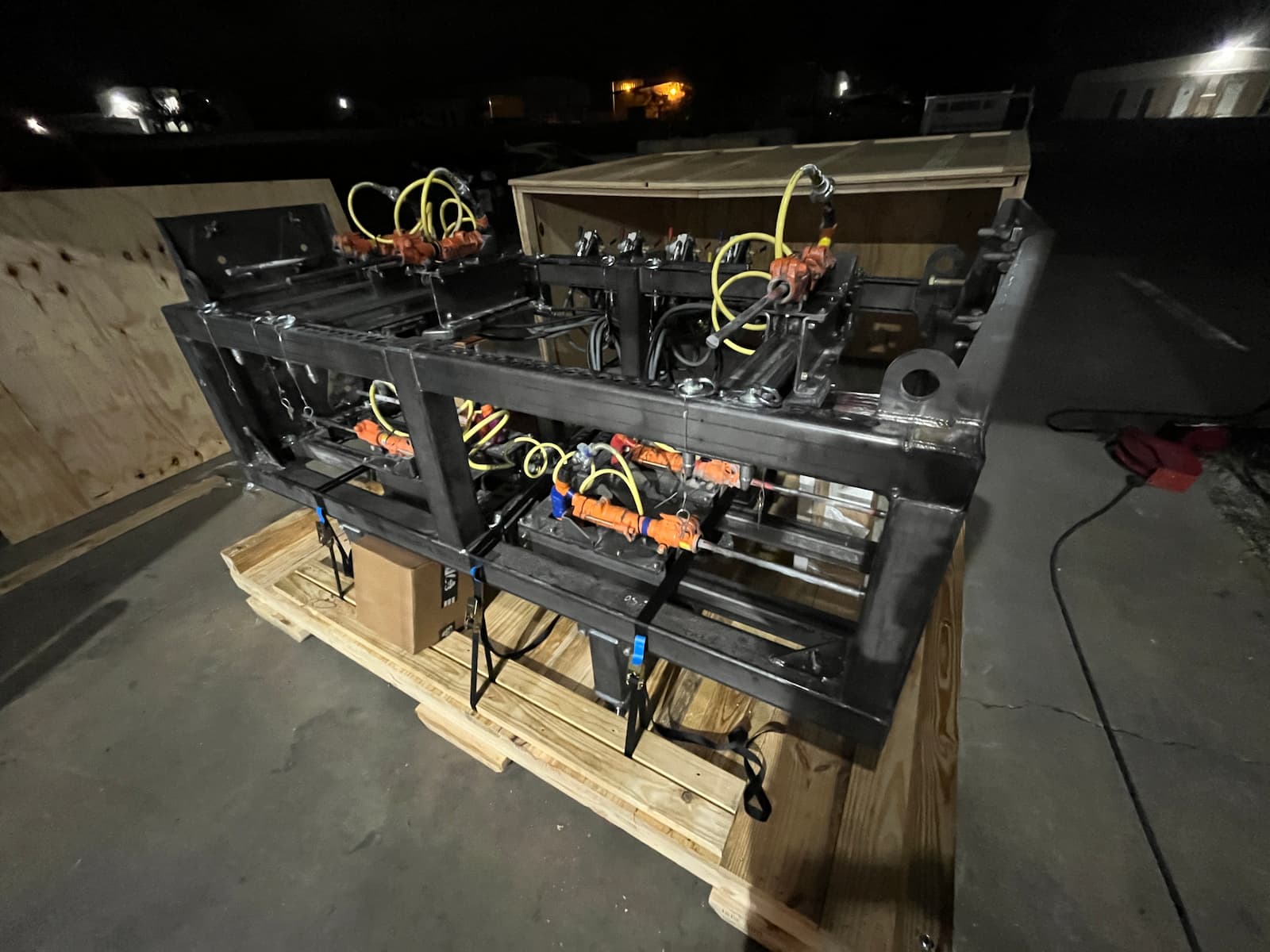
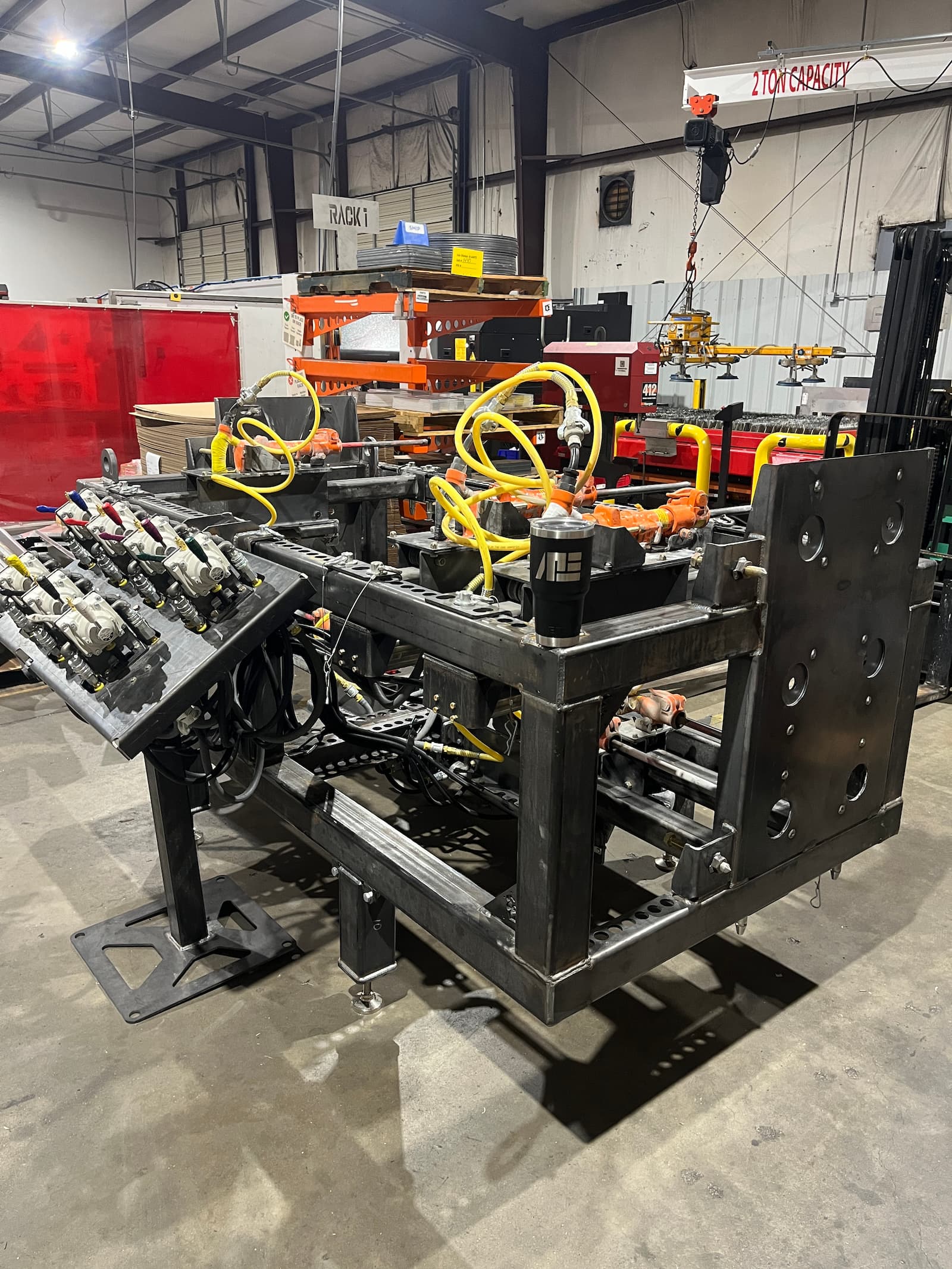
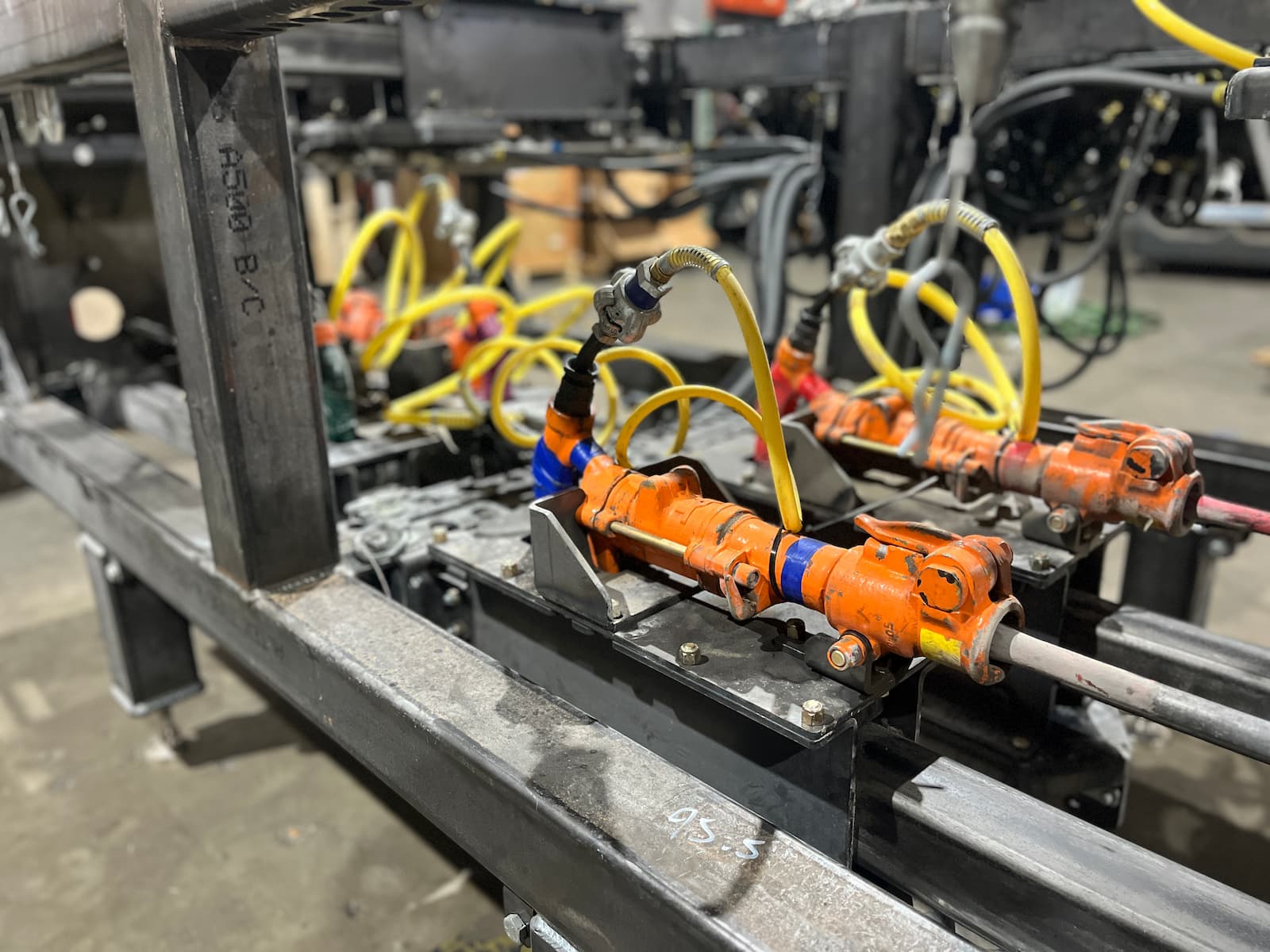
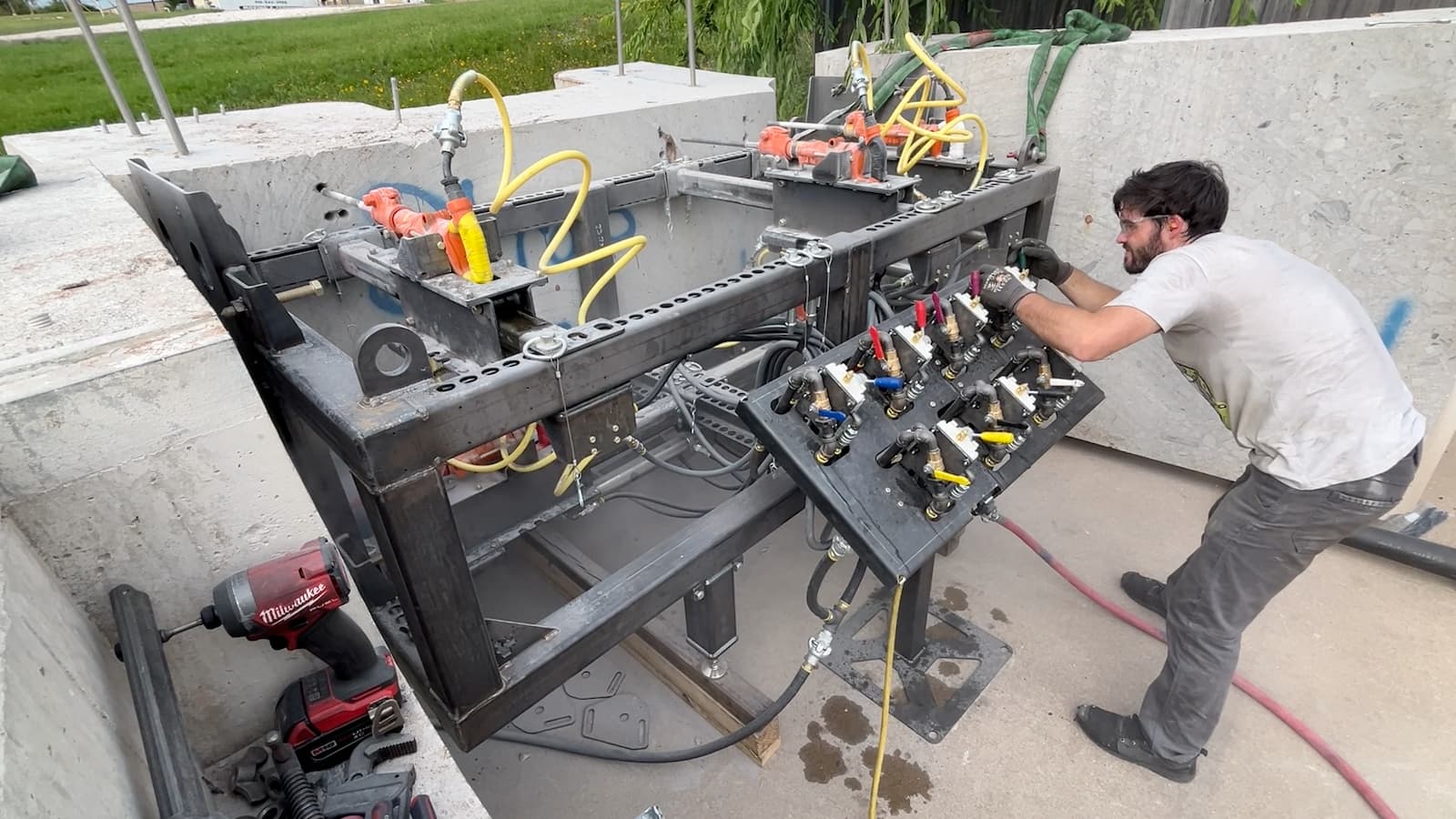
APE developed a custom gang-drill system built around seven rock drills operating across the required hole pattern. Instead of an operator manually supporting and advancing a single drill for every hole, the machine carried the drills while one operator controlled the drilling process through a pneumatic system.
The concept was straightforward. Fitting it into the available space was not.
Each drill had a fixed body length and a fixed-length drill bit. The drills needed enough forward travel to reach the required depth, but they also had to retract far enough for an operator to remove and replace the tooling. At the same time, the entire assembly had to fit between two concrete walls.
When the geometry was finalized, there was only about an inch of spare room in the system. With the drills retracted, there was just enough clearance to remove a bit. At full extension, the drills reached only about an inch farther than the required drilling depth. That narrow window dictated the drill size, mounting positions, and cylinder stroke.
The original concept used larger rock drills with simple mounting points, but they physically would not fit within those constraints. Switching to smaller drills solved the packaging problem but created another: the smaller drills were harder to mount rigidly. A connection that was originally expected to be a simple bolt-on interface became its own engineering problem.
Keeping the Drills Straight
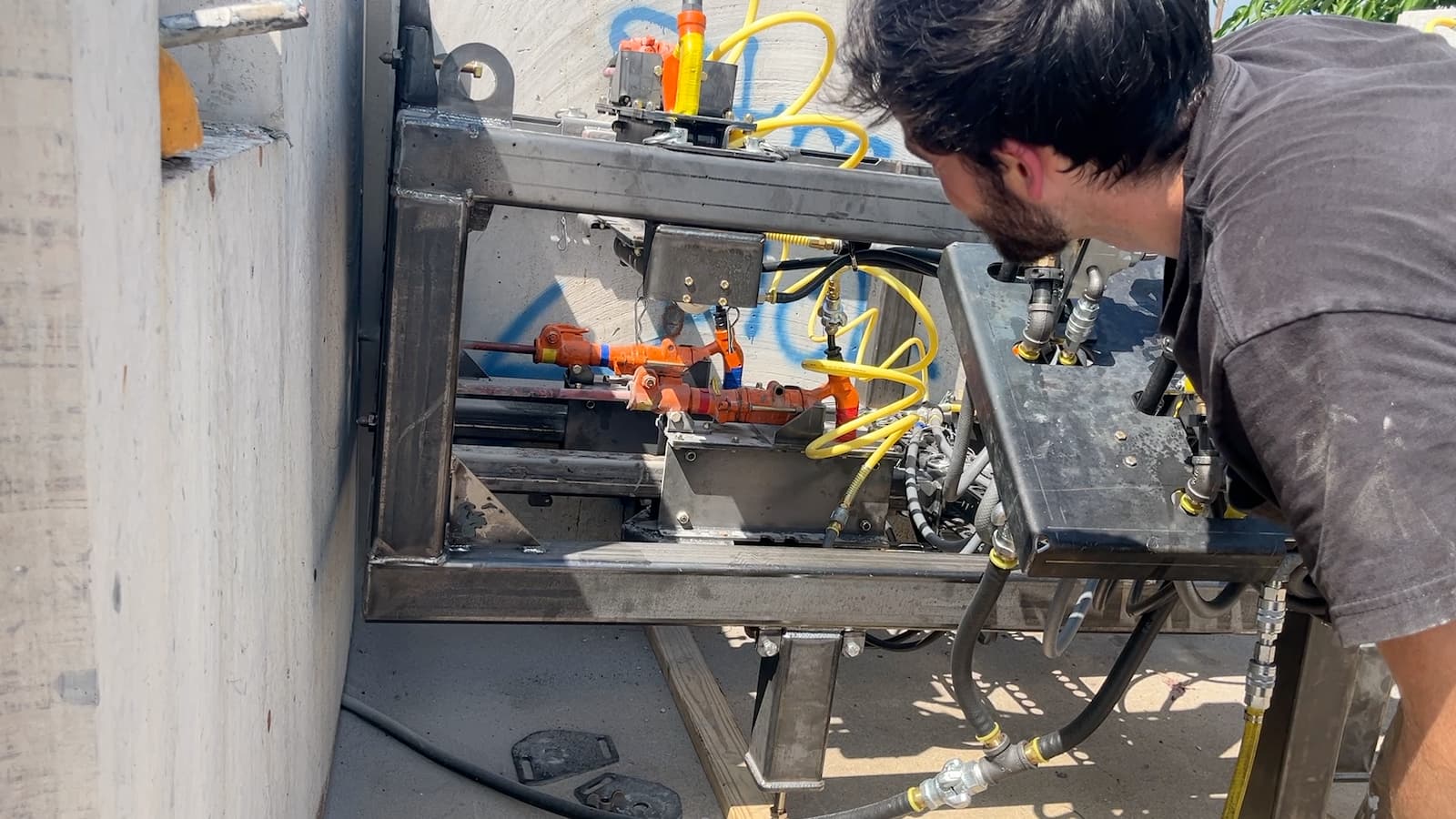
The geometry of the concrete introduced another complication. The side walls were tapered, which meant a drill contacting the surface without guidance could start at an angle. As the bit moved deeper into the concrete, that misalignment could cause it to bind.
APE designed a guide mechanism to keep each drill aligned as it entered the wall. The guide itself had to strike a careful balance: tight enough to keep the drill running true, but loose enough that the guide did not become the source of binding. That clearance was ultimately refined during full-scale testing.
Seven Drills, Individually Controlled
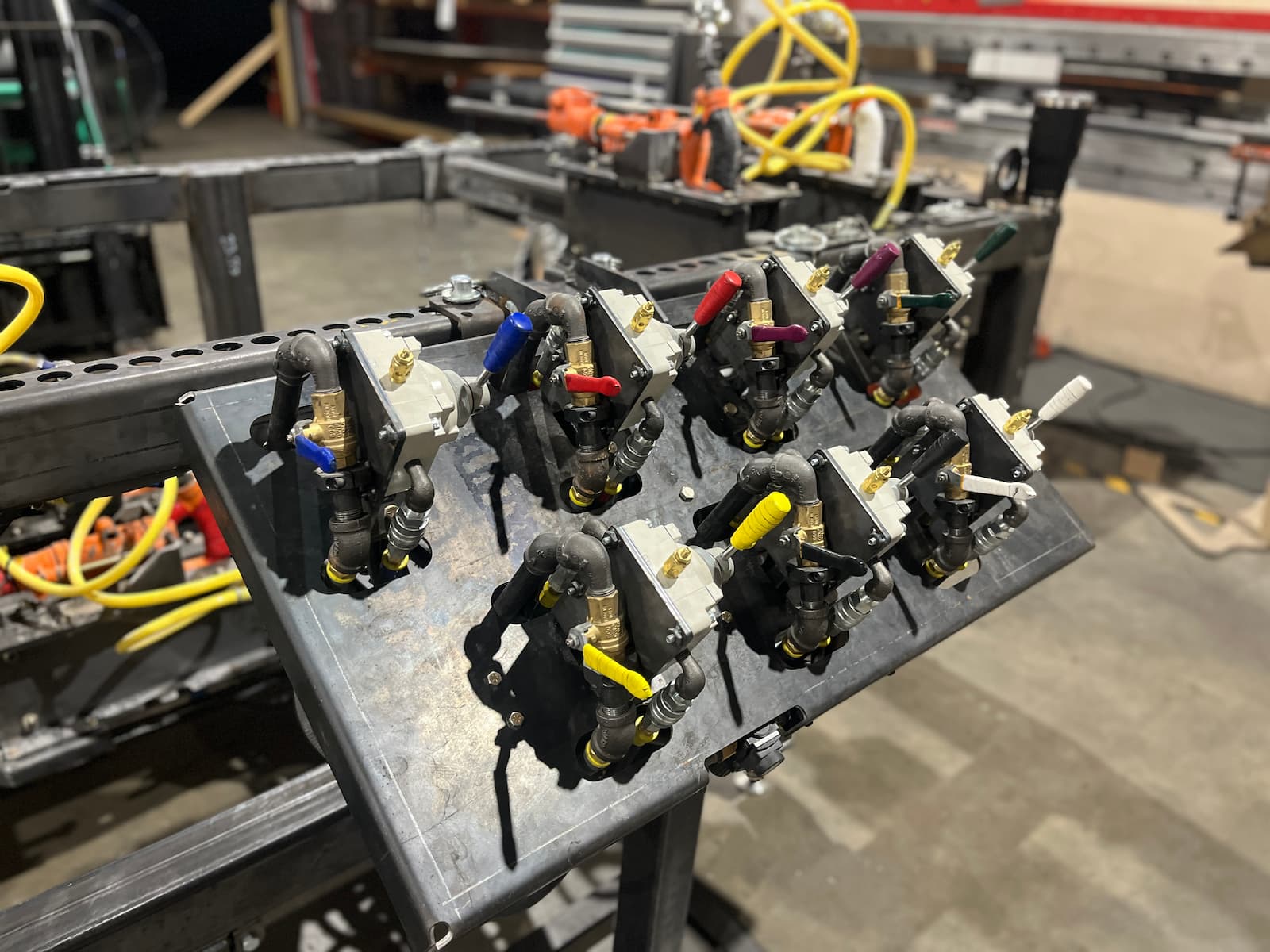
Although the machine performed one coordinated operation, each drill still needed to be controlled independently. Every rock drill had its own on/off control, and every pneumatic cylinder had to extend and retract independently.
That created a much denser pneumatic system than the machine's basic operating concept might suggest. The seven double-acting cylinders alone required fourteen air hoses, with another seven supplying the rock drills and additional lines connecting the manifolds and operator controls.
All of that plumbing had to be routed in a way that stayed organized, protected the hoses, and reduced the chance of anything snagging or being damaged in the field. APE also tuned the system so the contractor would not have to adjust pressure, exhaust, or drill speed onsite. The goal was for the machine to behave correctly when the operator moved the controls, without requiring field tuning first.
Designed Around What Would Eventually Break
Repairability was part of the design from the beginning. APE assumed the machine would eventually take abuse, so components were not boxed into inaccessible assemblies or permanently welded together where a bolted connection made more sense.
The design used modular parts wherever practical, and many of the replaceable components were simple flat laser-cut pieces that could be quickly reproduced and formed if something failed. The objective was to avoid turning a damaged component into a long-lead repair or forcing the contractor to rebuild a larger portion of the machine around it.
That mattered because the machine was being built for an active construction site, not a controlled production floor. Dust, water, vibration, impacts, damaged hoses, and rough handling were expected operating conditions.
Turnkey by Design
The same thinking carried through to delivery. The gang drill was shipped fully assembled with its air hoses still connected. The contractor only needed to connect its air supply at the designated points for the cylinders and rock drills.
The machine was designed so it could be lifted directly out of freight and lowered into the work area ready to operate. For a project with a rigid work window, minimizing setup and troubleshooting onsite was part of the engineering requirement, not a convenience added at the end.
Proving It Before the Deadline Started
APE and the customer had agreed that the machine would be fully tested before delivery. The contractor's schedule was extremely rigid, and there was little room for troubleshooting once the drilling work began. Overrunning the allotted window would carry significant financial consequences for the contractor, which made the jobsite the wrong place to discover problems with a new machine.
To test the gang drill under realistic conditions, the machine was tested at APE's facility using concrete blocks.
The first test exposed several issues. Some drills stuck or wedged, the guide mechanisms needed clearance adjustments, parts of the pneumatic system needed correction, and some hose components failed during testing. None of those problems required a fundamental redesign of the machine. Instead, the team adjusted clearances, corrected the pneumatics, replaced unreliable components, and ran the system again.
That iterative process was the point of testing at full scale. A problem discovered in APE's parking lot could be diagnosed and corrected before shipment. The same problem discovered after the machine had been lowered into the cofferdam could consume valuable time during the contractor's limited work window.
Once the system was working correctly, APE cleaned off the concrete dust, crated the fully assembled machine, and shipped it turnkey.
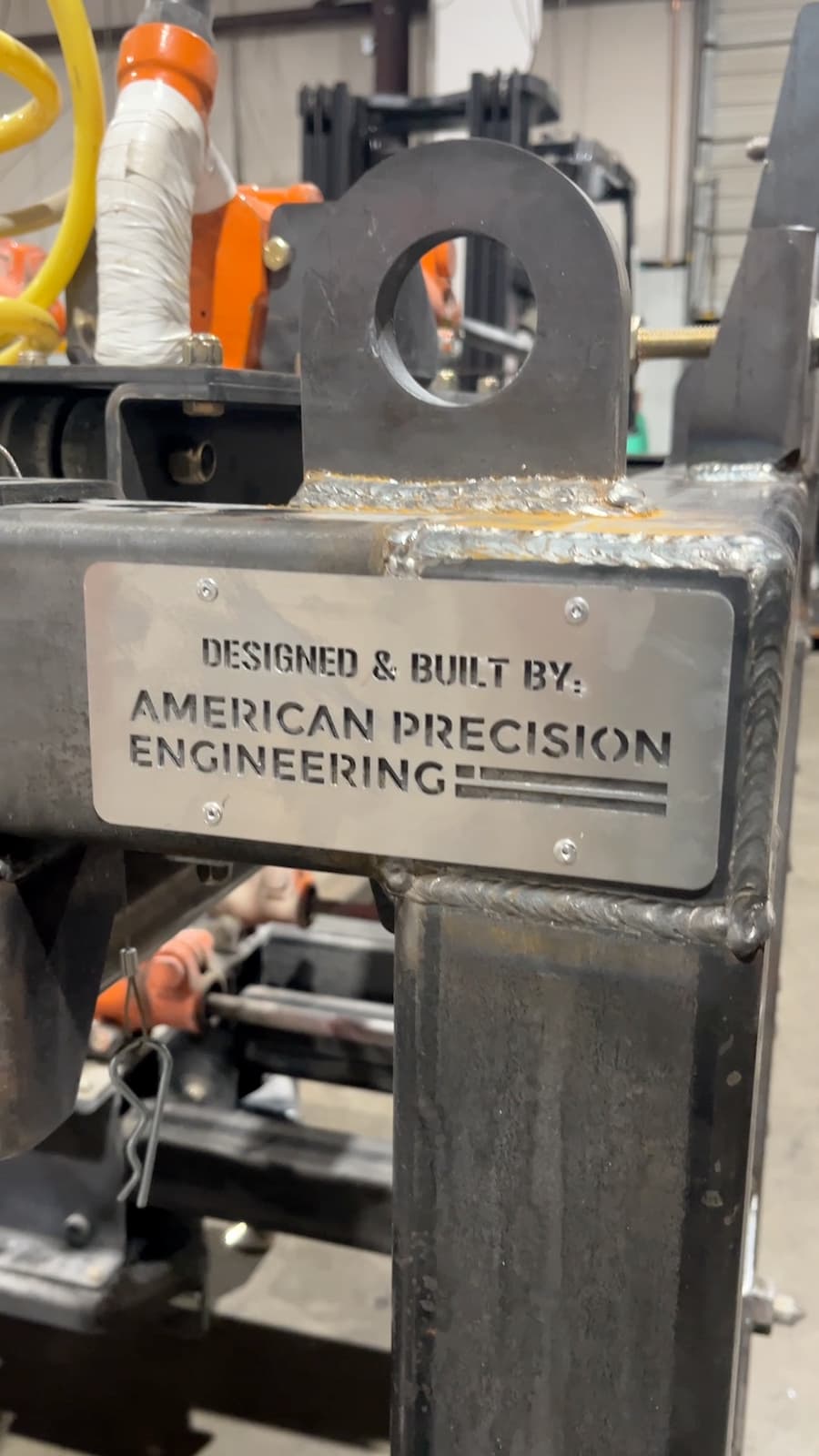
The Outcome: Seven Holes in One Operation
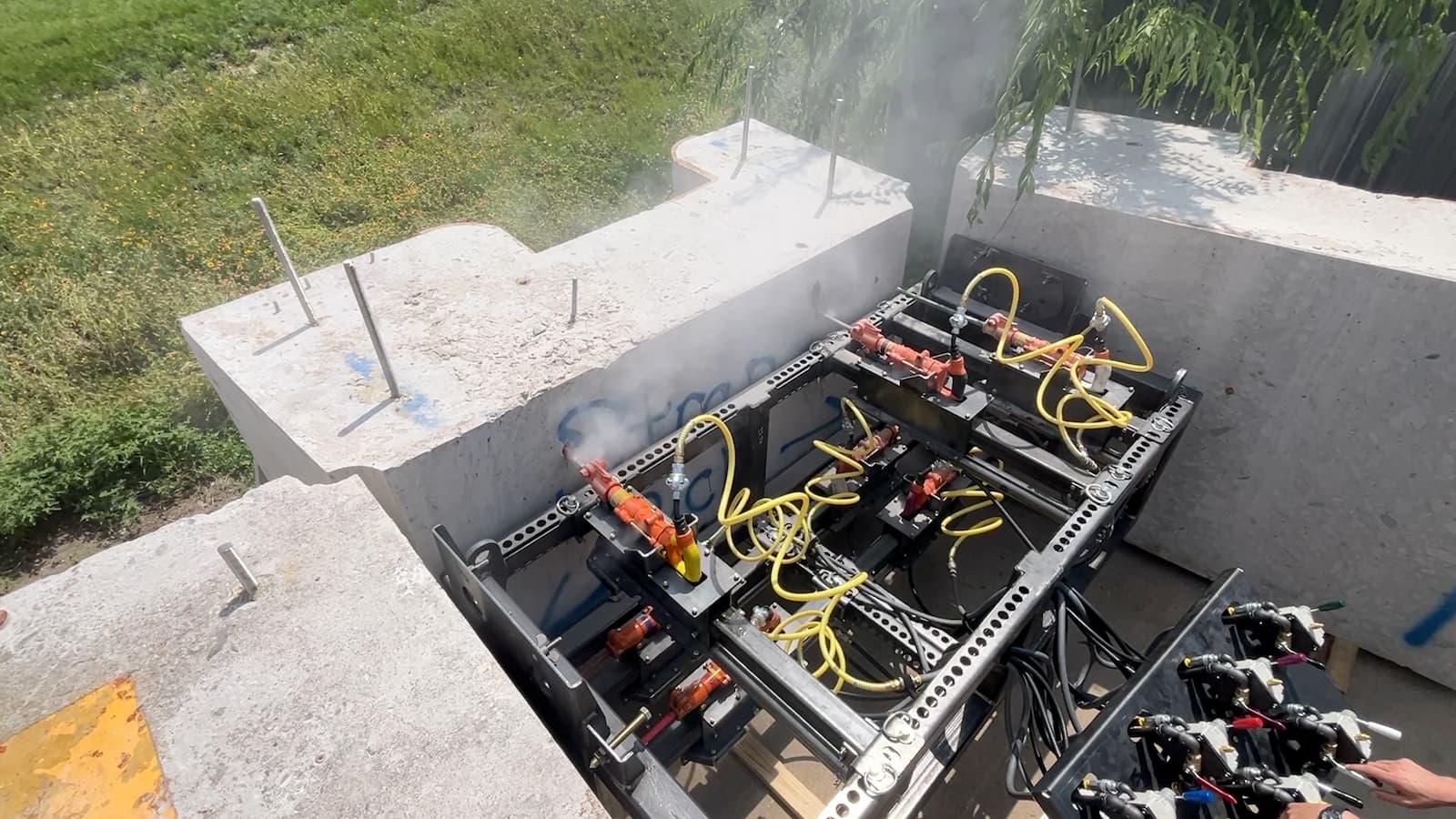
The finished gang drill replaced a repetitive one-hole-at-a-time process with a purpose-built system capable of drilling an entire seven-hole row at once. One operator could control all seven drills from a single machine rather than manually drilling every position individually.
For the contractor, that meant:
- Seven drills operating simultaneously
- One operator controlling the drilling process
- Independent control of each drill and cylinder
- Less manual handling of individual rock drills
- A machine designed specifically for a harsh concrete-construction environment
- Modular and replaceable components intended to minimize downtime
- A pneumatic system tuned before delivery rather than in the field
- Full-scale testing against concrete before shipment
- A turnkey machine ready to connect to air and go to work
APE moved the project from concept through engineering, fabrication, assembly, testing, troubleshooting, and shipment under a heavily compressed schedule. The machine shipped on time and ready to go to work.
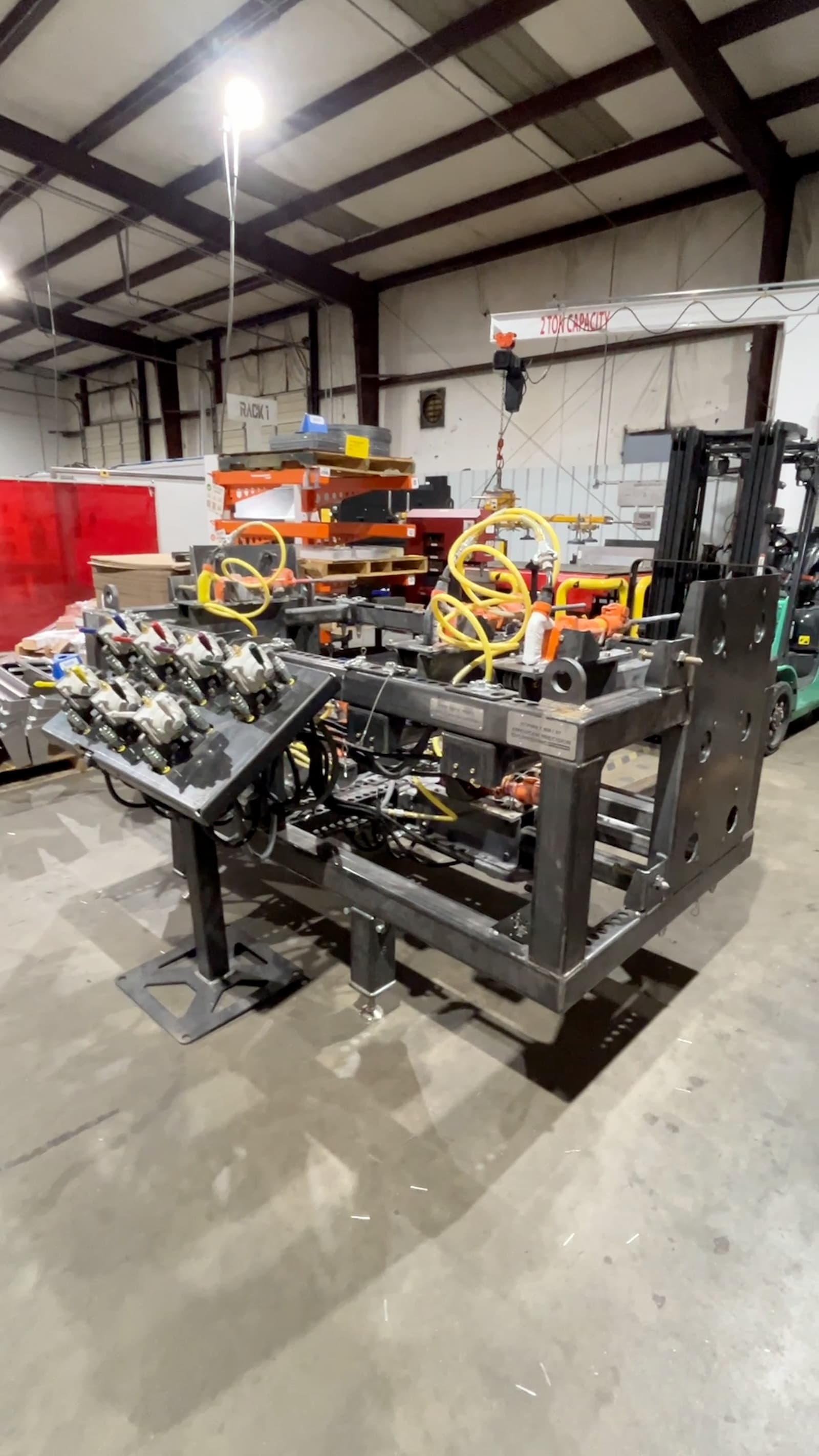
The Bigger Picture: Sometimes the Bottleneck Is the Opportunity
The contractor didn't come to APE because they wanted a custom machine. They came because they had a lot of drilling to finish and not much time to finish it. The gang drill was simply the answer to that problem.
That's an important distinction in custom equipment design. The best solution isn't necessarily the most automated or the most complicated. It's the one that removes the constraint without creating a new one somewhere else.
The finished gang drill looked complicated because of what it could do, but the underlying design was intentionally straightforward. We simplified the parts and assemblies wherever possible so the machine could be fabricated quickly, assembled without unnecessary complexity, repaired when something failed, and operated without extensive field adjustment.
In this case, that meant taking an operation normally performed one hole at a time and designing a rugged, serviceable system that could do an entire row at once.
Have an Operation That's Slowing the Whole Project Down?
You don't need to have the machine figured out before you call us.
Bring APE the bottleneck, the constraint, or even the half-finished idea. We'll help figure out what needs to exist, engineer it, build it, and prove it works.
Tell us what you're trying to get done.

Related Case
Studies
Explore our recent case studies showcasing innovative solutions for advanced manufacturing.

Custom Robotic End-of-Arm Tooling for Engine Block Handling and Assembly
A world-leading diesel engine manufacturer developed a new engine block casting for the latest generation of their engines.

Nuclear Reactor Fuel Cell Prototype
How a growing nuclear energy company partnered with APE to turn a complex fuel-cell concept into a precise, test-ready prototype.

What Else Do We Do? Design And Engineering
Explore our comprehensive design and engineering services that lay the foundation for innovative and effective solutions. From concept to planning, every project is meticulously crafted to meet your needs.
Quality & Certifications
At APE, quality is woven into every part of our project life cycle. From design verification to the raw materials we use, to final assembly, our AS9100 certified quality management system... Read more